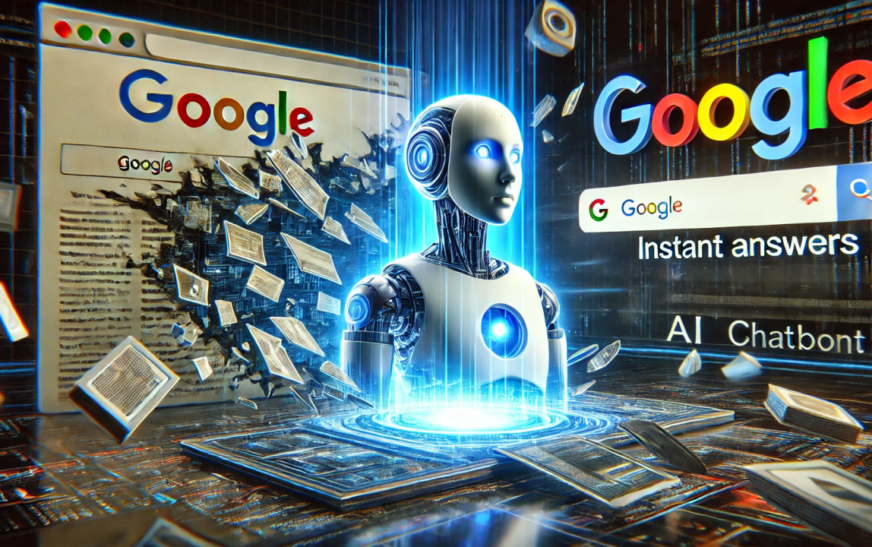
Will AI kill the search engine? It’s a question echoing across tech forums, boardrooms, and coffee shops alike. The rise of AI-powered tools like ChatGPT, Google’s Gemini, and Microsoft’s Copilot has sparked a revolution in how we find information online. But does this mean traditional search engines are doomed? My take is clear: AI isn’t killing search engines—it’s transforming them. Rather than replacing them, artificial intelligence is becoming the backbone of a smarter, faster, and more intuitive search experience. Let’s dive into why the future of search isn’t extinction—it’s evolution.
The Search Engine Revolution: From Keywords to Conversations
Remember when finding answers online meant typing fragmented keywords like “best pizza near me 2023” into Google? Those days are fading fast. Today’s search engines are no longer just indexers of web pages—they’re intelligent assistants capable of understanding context, intent, and even emotion.
AI has fundamentally changed how search engines process queries. Instead of matching keywords, modern algorithms use natural language processing (NLP) and machine learning to interpret what users truly mean. For example, asking “Why is my phone battery draining so fast?” now triggers a response that considers device type, usage patterns, and common fixes—not just pages containing the exact phrase.
This shift from keyword-based search to conversational AI doesn’t eliminate the need for search engines. Instead, it makes them more powerful. Users still need a gateway to the vast ocean of online information—and that gateway is evolving, not disappearing.
AI vs. Search Engines: A False Dichotomy
Many people frame the debate as “AI vs. search engines,” as if they’re competing forces. That’s a misunderstanding. AI isn’t an alternative to search engines—it’s the engine under the hood.
Consider Google’s Search Generative Experience (SGE), which uses generative AI to summarize results, answer complex questions, and even draft follow-up queries. This isn’t replacing Google Search; it’s enhancing it. Similarly, Bing’s integration with ChatGPT allows users to ask questions in natural language and receive detailed, sourced responses—all within the familiar Bing interface.
The reality is that AI needs search engines just as much as search engines need AI. AI models require up-to-date, reliable data to generate accurate responses. Search engines provide that data by crawling, indexing, and ranking billions of web pages. Without search infrastructure, AI would be like a brain without senses—powerful, but disconnected from the real world.
Why Search Engines Are Still Essential
Despite the hype around AI chatbots, search engines remain indispensable for several key reasons:
- Credibility and sourcing: AI can hallucinate or provide outdated information. Search engines prioritize authoritative sources, helping users verify facts.
- Discovery: Not every question has a pre-trained answer. Search engines help users discover new content, trends, and perspectives.
- Personalization at scale: AI tailors results based on user behavior, location, and preferences—something only possible with robust search infrastructure.
- Real-time updates: News, weather, stock prices, and local business info change constantly. Search engines refresh this data in real time, while static AI models lag behind.
Imagine asking an AI, “What’s the best restaurant open right now near me?” Without access to live search data, the AI might suggest a place that closed last year. Search engines solve this by integrating real-time indexing and local business APIs.
The Rise of Hybrid Search: AI Meets Indexing
The future of search isn’t AI or search engines—it’s AI and search engines working together. This hybrid model combines the best of both worlds: the depth and accuracy of indexed content with the speed and fluency of AI-generated responses.
Google’s “AI Overviews” are a prime example. When you search for something like “how to fix a leaky faucet,” Google now shows a concise AI-generated summary at the top, followed by links to detailed guides, videos, and forums. This gives users a quick answer while preserving access to deeper resources.
Similarly, DuckDuckGo’s AI-powered “!bang” shortcuts and Brave Search’s AI summarization features show how smaller players are also embracing AI without abandoning core search principles. These tools don’t replace the search results page—they enhance it.
User Behavior Is Changing—But Not Abandoning Search
Some argue that users are shifting from search engines to AI chatbots. While it’s true that people are experimenting with tools like Perplexity.ai or You.com, these platforms still rely on search data. Perplexity, for instance, uses Google Search and Bing APIs to retrieve information before summarizing it with AI.
Moreover, user behavior data shows that search engine traffic remains strong. According to Statista, Google alone processes over 8.5 billion searches per day as of 2024. That’s not a sign of decline—it’s a sign of resilience.
What’s changing is how people search. Voice search, visual search (like Google Lens), and natural language queries are on the rise. But these trends don’t eliminate the need for search engines—they demand smarter ones. And that’s where AI comes in.
The Threat Isn’t AI—It’s Misinformation
If there’s a real danger to the search ecosystem, it’s not AI itself—it’s the potential for AI to spread misinformation at scale. Generative AI can produce convincing but false answers, especially when trained on biased or outdated data.
Search engines, by contrast, are built on ranking systems that prioritize credibility. Google’s E-E-A-T (Experience, Expertise, Authoritativeness, Trustworthiness) guidelines, for example, help surface reliable content. AI tools that bypass these safeguards risk eroding user trust.
This is why major tech companies are investing heavily in AI safety and transparency. Google’s “About this result” feature, which shows why a page ranks for a query, is being extended to AI-generated answers. Users want to know: Where did this information come from? Search engines are uniquely positioned to answer that.
SEO in the Age of AI: Adapting, Not Dying
Digital marketers and content creators often worry that AI will make SEO obsolete. After all, if users get answers directly from AI, why click on websites?
The truth is more nuanced. While AI may reduce click-through rates for some queries, it also creates new opportunities. High-quality, well-structured content is more valuable than ever—because AI needs reliable sources to draw from.
Google has made it clear that helpful, original content still ranks. In fact, AI-generated content that lacks value or duplicates existing material is penalized. This means creators who focus on depth, expertise, and user intent will thrive—even in an AI-driven world.
Moreover, AI is changing SEO tactics. Keyword stuffing is dead, but semantic search, topic clusters, and entity-based optimization are rising. Tools like Clearscope and MarketMuse use AI to analyze top-ranking content and suggest improvements—helping marketers create content that both humans and algorithms love.
Will AI Replace Google? Not Anytime Soon
Could a standalone AI chatbot one day replace Google Search? Technically, yes—but practically, no. Google’s dominance isn’t just about technology; it’s about infrastructure, trust, and ecosystem.
Google controls the world’s largest search index, processes petabytes of data daily, and integrates with Maps, YouTube, Gmail, and Android. Replicating that scale would require more than a clever chatbot—it would require a global tech empire.
Even if a new AI-first search tool emerges, it would still need to crawl the web, rank pages, and verify sources. That’s the core function of a search engine. AI can enhance that function, but it can’t replace it entirely.
The Future: Smarter Search, Not No Search
So, is AI going to kill the search engine? My answer is a firm no. AI is not the end of search—it’s the next chapter.
The future will likely feature AI-powered search assistants that understand context, anticipate needs, and deliver personalized results in real time. But these assistants will still rely on search engines to gather, organize, and validate information.
Think of it like this: AI is the brain, but the search engine is the nervous system. You can’t have one without the other.
Key Takeaways
- AI is transforming search engines, not replacing them.
- Modern search relies on AI for understanding natural language and user intent.
- Search engines provide credibility, real-time data, and discovery—things AI alone cannot guarantee.
- Hybrid models (AI + indexing) are the future of search.
- SEO is evolving, not dying—quality content remains king.
- Google and other major players will continue to dominate due to infrastructure and trust.
FAQ
Will AI chatbots like ChatGPT replace Google Search?
Not likely. While AI chatbots can answer questions, they lack real-time data, source verification, and the ability to discover new content. Google Search integrates AI to enhance results, but the core function of indexing and ranking web pages remains essential.
Are search engines becoming obsolete because of AI?
No. Search engines are evolving with AI, not being replaced by it. AI improves how search engines understand and respond to queries, but the need for a trusted, scalable way to access information online ensures search engines will remain vital.
How should content creators adapt to AI-driven search?
Focus on creating high-quality, original, and helpful content that demonstrates expertise. Use clear structure, answer user intent, and optimize for semantic search. AI rewards depth and reliability—so prioritize value over volume.
Final Thoughts
The fear that AI will kill the search engine is understandable—but misplaced. We’re not heading toward a world without search. We’re entering an era of intelligent search, where AI and indexing work hand in hand to deliver faster, smarter, and more accurate results.
Rather than fearing AI, we should embrace its potential to make search more human—more conversational, more intuitive, and more helpful. The search engine isn’t dying. It’s getting an upgrade.
And if you’re still wondering whether AI will kill the search engine? My take is simple: it’s already made it better.