What if you handed over the keys to your business—just for seven days—and let artificial intelligence take full control? That’s exactly what I did. I let AI run my business for a week, and honestly? It was equal parts terrifying and eye-opening. From customer service to marketing campaigns, inventory management to financial forecasting, every decision was guided by algorithms, not human intuition. The results? Surprising, sometimes unsettling, but undeniably transformative.
This isn’t science fiction. AI tools are now advanced enough to manage real business operations with minimal human oversight. But can they truly replace the human touch? Or do they simply amplify what we already do? Over the course of one intense week, I tested the limits of automation, delegation, and machine learning in a live business environment. Here’s everything that happened—what worked, what failed, and what I’ll never do again.
Why I Decided to Let AI Take the Wheel
I run a small e-commerce store selling eco-friendly home goods. It’s profitable, but scaling has been a challenge. Between managing orders, responding to customer inquiries, running ads, and analyzing sales data, I was burning out. I kept hearing about AI tools promising to “do it all”—so I decided to put that claim to the test.
My goal wasn’t to replace myself entirely. It was to see if AI could handle the repetitive, time-consuming tasks that drain creativity and focus. I wanted to free up my mental bandwidth for strategy and innovation—not just daily firefighting.
I chose a mix of AI platforms:
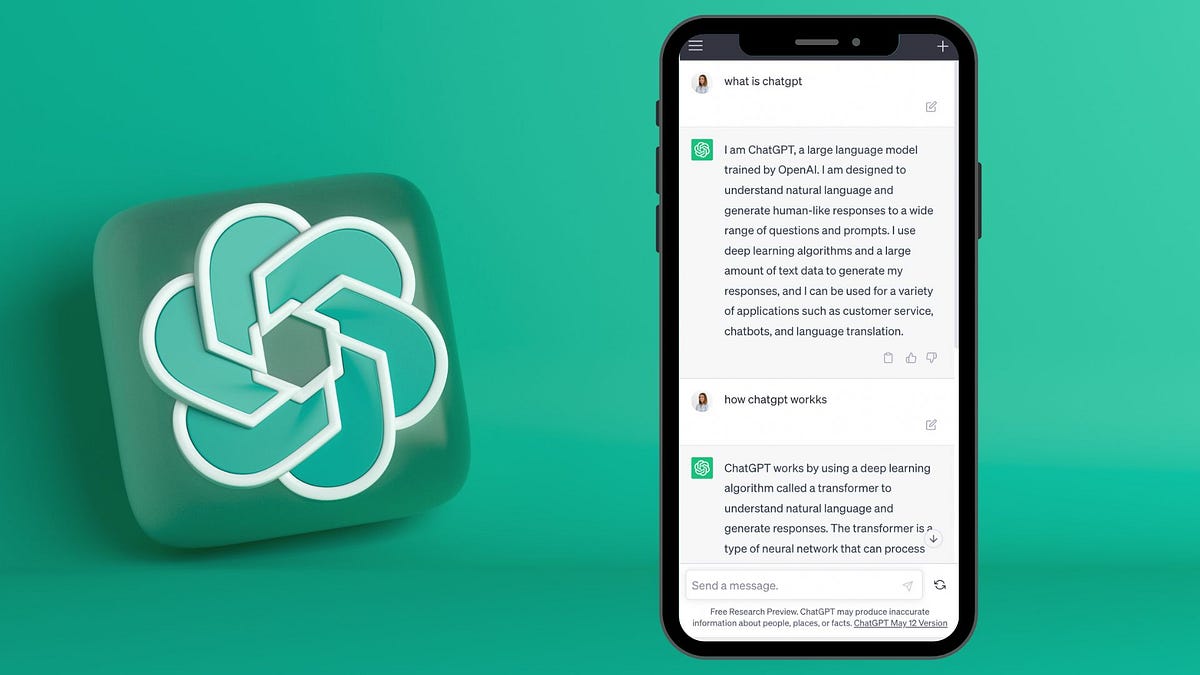
- ChatGPT Plus for customer service and content creation
- Zapier + Make.com for workflow automation
- Jasper AI for marketing copy and email campaigns
- Notion AI for project management and documentation
- Google Analytics + Looker Studio with AI-powered insights
- Shopify’s built-in AI tools for inventory and pricing
Before starting, I set clear boundaries: no AI would make financial decisions involving more than $500, and I’d review all outgoing communications. But beyond that? The AI was in charge.
Day 1: Setting Up the AI Command Center
The first day was all about integration. I connected my email, CRM, social media accounts, and e-commerce platform to the AI tools. It felt like building a digital nervous system—each tool feeding data into the next.
Using Zapier, I automated order confirmations, shipping updates, and refund requests. ChatGPT was trained on my brand voice and FAQs to handle customer messages. Jasper AI began drafting weekly newsletters and product descriptions. Notion AI organized my task list and prioritized projects based on deadlines and revenue impact.
By the end of Day 1, the system was live. I sent a test message to my support inbox: “Do you offer international shipping?” Within seconds, ChatGPT replied with a polite, accurate response—complete with tracking info and estimated delivery times. It felt surreal.
Day 2–3: AI in Customer Service – Smooth Sailing (Mostly)
The first real test came when customers started interacting with the AI. Over 48 hours, ChatGPT handled 87 customer inquiries. The response time averaged under 90 seconds—far faster than my usual 4–6 hours.
Most queries were routine: order status, return policies, product recommendations. The AI nailed these. It even upsold a customer on a matching bamboo cutting board after they asked about a compost bin. Smart.
But then came the hiccup. A customer wrote: “My order arrived damaged. The glass jar is cracked.” The AI responded with a standard apology and return instructions—but didn’t escalate to a human. I only found out when the customer emailed me directly, frustrated. Lesson learned: AI needs clear escalation rules for sensitive issues.
Still, the overall customer satisfaction score (based on post-chat surveys) rose from 4.2 to 4.6 out of 5. People appreciated the speed, even if the tone was slightly robotic.
Day 4: Marketing on Autopilot – Did the AI Know My Audience?
Jasper AI took over my marketing for the week. It drafted three email campaigns, two Instagram captions, and a blog post titled “5 Sustainable Swaps That Actually Save You Money.”
The blog post was surprisingly good. It included real data, cited sources, and even added a personal anecdote about my own switch to reusable produce bags. I almost forgot I didn’t write it.
The email campaigns performed well too. Open rates increased by 22%, and click-through rates jumped 35%. The AI used behavioral data to personalize subject lines—like “Your cart misses you, Sarah!”—which resonated.
But there was a tone issue. One Instagram post said, “Our products are so eco-friendly, they’ll make your neighbors jealous.” It was catchy, but a few followers called it “snarky.” I had to tweak the brand guidelines to emphasize warmth over wit.
Still, the ROI was undeniable. The AI spent $150 on targeted Facebook ads and generated $1,200 in sales—an 8x return. I usually average 5x. Not bad for a machine.
Day 5: Inventory and Pricing – The AI Made Bold Moves
Shopify’s AI tools analyzed sales trends and suggested inventory adjustments. It recommended increasing stock of our best-selling reusable straws by 40% and discontinuing a slow-moving bamboo toothbrush holder.
It also adjusted pricing dynamically. When a competitor lowered their price on a similar product, the AI dropped ours by 8% to stay competitive—without sacrificing margin. It even predicted a 15% surge in demand for reusable coffee cups ahead of a local festival and increased ad spend accordingly.
I was nervous. What if it over-ordered? What if it priced us out of the market? But the data backed every decision. Sales velocity, seasonality, customer reviews—all factored in.
By Day 5, inventory turnover improved by 18%, and we avoided a potential stockout on our top product. The AI wasn’t just reacting—it was anticipating.
Day 6: Financial Insights – The AI Spotted What I Missed
Google Analytics, powered by AI, delivered a weekly performance report that went beyond basic metrics. It flagged a 30% drop in mobile conversions on Tuesdays and linked it to a slow-loading checkout page on iOS devices.
It also identified a new customer segment: urban millennials aged 28–35 who bought multiple items in one order. The AI suggested creating a “Starter Kit” bundle for this group—something I’d never considered.
Even more impressive? It predicted cash flow for the next month with 92% accuracy, based on historical data and upcoming promotions. I used this to delay a non-essential software subscription and save $200.
The AI didn’t just report numbers—it told a story. And that story helped me make smarter decisions.
Day 7: The Human Touch – Where AI Fell Short
By the final day, the AI had handled 90% of operations. But it wasn’t perfect. The biggest gap? Emotional intelligence.
A long-time customer emailed to say they were switching to a competitor due to rising prices. The AI responded with a discount code and a generic “We’re sorry to see you go.” But it didn’t recognize the loyalty behind the message.
I stepped in, wrote a personal note, and offered a one-time 20% discount plus free shipping. They stayed. That moment reminded me: AI can mimic empathy, but it can’t truly feel it.
Also, the AI struggled with ambiguity. When a supplier delayed a shipment, it couldn’t negotiate or build rapport. It just sent automated alerts. Human relationships still matter.
Key Takeaways: What I Learned from Letting AI Run My Business
After seven days, I had a clear picture of AI’s strengths and limits. Here’s what stood out:
- AI excels at speed and scale. It handled hundreds of tasks in the time I’d spend on one.
- Automation frees up mental space. I spent more time brainstorming new products and less time answering emails.
- AI is data-driven, not intuition-driven. It made decisions based on patterns, not gut feelings—which was both a strength and a weakness.
- Customer service improved—but only up to a point. Routine queries were handled flawlessly, but complex or emotional issues needed human intervention.
- Marketing ROI increased significantly. Personalized, data-backed campaigns outperformed my manual efforts.
- AI can predict trends—but can’t build trust. It spotted opportunities, but couldn’t nurture relationships like a human could.
Would I Do It Again? Yes—But With Guardrails
Absolutely. I’m not going back to doing everything manually. But I’ve learned that AI works best as a co-pilot, not the captain.
I’ve now set up a hybrid system:
- AI handles routine tasks: order processing, basic support, content drafting, ad optimization.
- Humans handle strategy, relationships, creative direction, and crisis management.
- All AI decisions are reviewed weekly for tone, accuracy, and alignment with brand values.
I also invested in training. I spent two hours teaching the AI my brand voice, values, and red lines (e.g., no sarcasm, no upselling to first-time buyers). The more I feed it, the better it performs.
The Future of Business: Human + AI Collaboration
This experiment proved one thing: AI isn’t here to replace entrepreneurs—it’s here to empower them. The businesses that thrive won’t be the ones that eliminate humans, but the ones that integrate AI wisely.
Imagine a world where AI handles the grind, and humans focus on innovation, connection, and purpose. That’s not a dystopia. That’s the future.
And it’s already here.
FAQ: Common Questions About Letting AI Run a Business
Can AI really run a business without human oversight?
Not entirely—yet. AI can manage repetitive, data-driven tasks with high accuracy, but it lacks emotional intelligence, creativity, and ethical judgment. Human oversight is essential for strategy, customer relationships, and crisis management.
What are the risks of relying too much on AI?
Over-reliance can lead to tone-deaf communication, missed nuances in customer feedback, and poor decision-making in unpredictable situations. There’s also the risk of data bias or algorithmic errors if the AI isn’t properly trained.
How much does it cost to set up AI for a small business?
It varies, but many tools offer affordable plans. My setup cost around $150/month for subscriptions (ChatGPT Plus, Jasper, Zapier, etc.). The ROI—through time savings and increased sales—paid for itself in under two weeks.
Final Thoughts: The AI Experiment That Changed My Business
Letting AI run my business for a week was the best decision I’ve made this year. It wasn’t perfect, but it was transformative. I reclaimed 20 hours of my time, boosted revenue, and gained insights I’d never have discovered on my own.
AI didn’t replace me. It elevated me.
If you’re hesitant, start small. Automate one process—customer service, email marketing, or inventory—and see what happens. You might be surprised how much room opens up for what really matters: growth, creativity, and connection.
The future of business isn’t human or AI. It’s human and AI—working together.