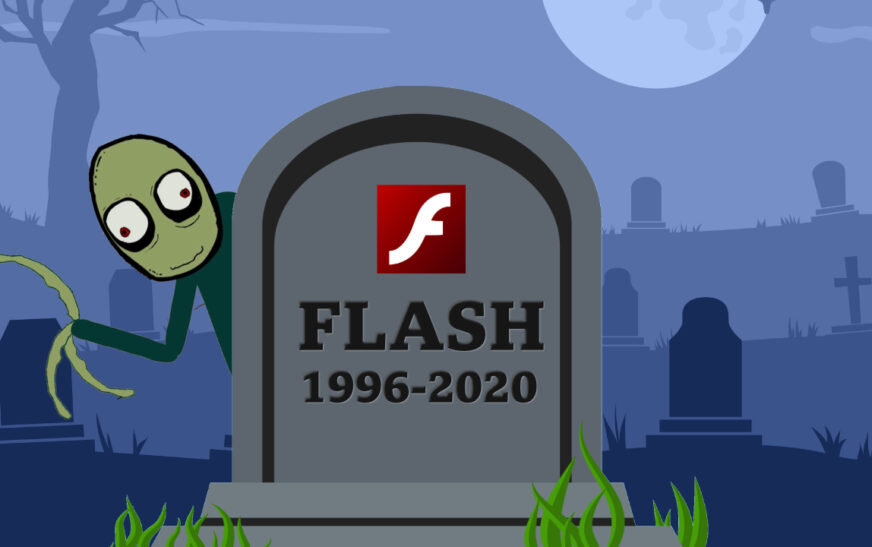
On December 31, 2020, Adobe officially retired Flash Player—a technology that once powered the internet’s most interactive experiences. For over two decades, Flash Player was the backbone of online animations, games, videos, and web applications. Its discontinuation marked the end of an era, closing a chapter in digital history that shaped how we consumed content online. While modern standards like HTML5, WebGL, and WebAssembly now dominate, Flash Player’s legacy remains deeply embedded in the evolution of the web.
Flash wasn’t just a plugin—it was a cultural phenomenon. From viral games like FarmVille and Club Penguin to iconic cartoons like Homestar Runner and Newgrounds animations, Flash Player brought creativity to life in ways previously unimaginable. It democratized content creation, allowing anyone with a computer to become a digital artist, animator, or game developer. But as mobile devices rose and security concerns grew, Flash’s dominance began to wane.
Today, searching for “Flash Player” often leads to nostalgia, tutorials on how to run old games, or warnings about security risks. Yet, understanding why Flash Player was discontinued—and what it gave to the internet—helps us appreciate both its triumphs and its flaws. This article dives deep into the rise, fall, and enduring impact of Flash Player, exploring its technical legacy, cultural influence, and the lessons it leaves behind.
The Golden Age of Flash Player
Flash Player first launched in 1996 as Macromedia Flash, evolving from a simple vector animation tool into a full-fledged multimedia platform. By the early 2000s, it had become the default way to deliver rich internet content. Over 90% of desktop browsers supported Flash, making it nearly ubiquitous.
What made Flash Player so revolutionary was its ability to run complex animations and interactive content directly in the browser—without requiring users to download separate software. This opened the door for:
- Online gaming: Thousands of free browser-based games flourished, from puzzle adventures to multiplayer shooters.
- Web animations: Cartoon networks and indie creators used Flash to produce short films and viral videos.
- Interactive websites: Portfolios, product demos, and educational tools leveraged Flash for dynamic user experiences.
- Video streaming: Before YouTube adopted HTML5, Flash was the primary method for embedding videos online.
Platforms like Newgrounds, Miniclip, and AddictingGames became cultural hubs, powered entirely by Flash Player. These sites didn’t just host content—they fostered communities. Aspiring animators shared their work, received feedback, and even launched careers. Flash gave a voice to digital creators who lacked access to expensive production tools.
Why Flash Player Dominated the Web
Several factors contributed to Flash Player’s widespread adoption:
- Cross-platform compatibility: Flash worked seamlessly across Windows, macOS, and Linux.
- Small file sizes: Vector-based graphics kept animations lightweight and fast-loading.
- Rich interactivity: ActionScript, Flash’s scripting language, enabled complex logic and user input handling.
- Ease of use: Tools like Adobe Animate (formerly Flash Professional) allowed designers to create content without deep coding knowledge.
For many, Flash Player wasn’t just a tool—it was a gateway to the internet’s creative side. It turned static web pages into living, breathing experiences. Whether you were playing a pixel-art platformer or watching a satirical cartoon, Flash made the web feel alive.
The Downfall: Security, Performance, and the Mobile Revolution
Despite its popularity, Flash Player began showing cracks by the late 2000s. The same features that made it powerful also made it vulnerable. Frequent security vulnerabilities led to malware infections, phishing attacks, and system crashes. Cybercriminals exploited Flash to deliver ransomware and spyware, making it a prime target for hackers.
In 2010, Steve Jobs famously published an open letter titled “Thoughts on Flash,” outlining Apple’s decision not to support Flash on the iPhone and iPad. He cited three main concerns:
- Security: Flash was a frequent entry point for attacks.
- Performance: It drained battery life and slowed down devices.
- Open standards: Jobs argued the web should rely on open technologies like HTML5, not proprietary plugins.
This was a turning point. As mobile internet usage exploded, Flash Player—designed for desktops—struggled to adapt. Touch interfaces, limited processing power, and inconsistent rendering made Flash a poor fit for smartphones and tablets.
The Rise of HTML5 and Open Web Standards
While Flash faltered, open web technologies advanced rapidly. HTML5 introduced native support for audio, video, and canvas-based graphics—eliminating the need for plugins. CSS3 and JavaScript frameworks like jQuery and later React enabled rich interactivity without external dependencies.
Major platforms began transitioning away from Flash:
- YouTube switched to HTML5 by default in 2015.
- Facebook dropped Flash for video in 2014.
- Google Chrome and Mozilla Firefox started blocking Flash content by 2016.
Adobe itself acknowledged the shift. In 2017, the company announced it would stop updating and distributing Flash Player by the end of 2020. The writing was on the wall: the future belonged to open, secure, and mobile-friendly web standards.
Flash Player’s Cultural Legacy
Even as Flash Player faded, its cultural impact endured. Generations of internet users grew up with Flash games, animations, and interactive stories. These experiences weren’t just entertainment—they were formative.
Consider the following cultural touchstones powered by Flash Player:
- Newgrounds: Launched in 1995, this platform became a breeding ground for indie animators and musicians. Creators like Tom Fulp (founder of Newgrounds) and Edd Gould (creator of Eddsworld) gained global followings.
- Homestar Runner: This surreal comedy series, created by Mike and Matt Chapman, ran from 2000 to 2018 and became a cornerstone of early internet humor.
- Flash Games: Titles like Papa’s Pizzeria, Bloons Tower Defense, and Super Smash Flash became classics, played by millions during school breaks and lazy afternoons.
- Music and Art: Flash enabled experimental music videos and digital art projects, such as The Adventures of Dr. McNinja and Red vs. Blue (a machinima series originally made in Flash).
These creations weren’t just popular—they were pioneering. They proved that the internet could be a space for creativity, humor, and community, not just information and commerce.
Preserving Flash Content
With Flash Player gone, a major concern emerged: what happens to all the content built for it? Thousands of games, animations, and websites risked being lost forever.
Thankfully, preservation efforts have stepped in. Projects like the Flashpoint Archive have archived over 100,000 Flash games and animations, making them playable through emulators. Similarly, the Internet Archive hosts a growing collection of Flash content, ensuring future generations can experience this digital heritage.
These initiatives highlight Flash Player’s lasting value. It wasn’t just a technology—it was a medium that shaped internet culture. Preserving it is about more than nostalgia; it’s about safeguarding a unique chapter in digital history.
Technical Lessons from Flash Player
Flash Player’s rise and fall offer valuable lessons for developers, designers, and tech companies. Its story is a case study in innovation, adaptation, and the dangers of proprietary control.
Key technical takeaways include:
- Open standards win: Technologies that embrace openness, transparency, and community collaboration tend to outlast closed, proprietary systems.
- Security cannot be an afterthought: Flash’s vulnerabilities eroded user trust. Modern web development prioritizes security from the ground up.
- Mobile-first design is essential: Flash failed to adapt to mobile, while HTML5 and responsive design thrived.
- User experience matters: Slow load times, crashes, and intrusive ads drove users away from Flash-heavy sites.
Flash Player also demonstrated the power of democratized creation. By lowering the barrier to entry, it empowered millions to experiment, learn, and share. This spirit lives on in modern tools like Scratch, Unity WebGL, and web-based game engines.
ActionScript and the Evolution of Web Scripting
Flash’s scripting language, ActionScript, influenced the development of JavaScript and other web technologies. Early versions of ActionScript were based on ECMAScript, the same standard that underpins JavaScript. As web scripting evolved, many of Flash’s interactive concepts—event handling, animation loops, object-oriented design—were adopted and refined in modern frameworks.
While ActionScript is now obsolete, its legacy persists in the way developers think about interactivity and user engagement online.
The Final Days: Adobe’s Sunset and Global Shutdown
In July 2017, Adobe announced its plan to end-of-life Flash Player by December 31, 2020. The company committed to stopping updates, blocking content from running, and encouraging developers to migrate to modern alternatives.
Major browsers followed suit:
- Google Chrome disabled Flash by default in 2019 and removed support entirely in 2021.
- Mozilla Firefox blocked Flash content in 2016 and dropped support in 2020.
- Microsoft Edge (based on Chromium) never supported Flash natively and removed it with the transition from Internet Explorer.
- Apple Safari had already restricted Flash years earlier, especially on iOS devices.
On December 31, 2020, Adobe officially discontinued Flash Player. Websites that still relied on Flash were met with a blank screen or a message urging users to upgrade. For many, it was a quiet end—no fanfare, just the inevitable conclusion of a once-dominant technology.
The Last Flash Game?
Rumors swirled about a “final” Flash game released on the last day of support. While no official title claimed the title, communities like Newgrounds and Flashpoint celebrated the occasion with retrospectives, tribute animations, and marathon play sessions. It was less about closure and more about celebration—a final bow for a platform that gave so much to the internet.
Flash Player in the Modern Web: Emulation and Revival
Though Flash Player is gone, its content lives on—thanks to emulation. Projects like Ruffle, an open-source Flash emulator written in Rust, allow users to run SWF files directly in modern browsers without plugins.
Ruffle works by translating Flash bytecode into WebAssembly, enabling near-native performance. It’s integrated into platforms like the Internet Archive and Flashpoint, ensuring compatibility with thousands of legacy files.
Other tools, such as Swf2JS and Shumway (a now-discontinued Mozilla project), attempted similar feats. While not perfect, these emulators prove that Flash’s spirit can survive even after its technology fades.
For educators, historians, and nostalgic users, emulation is a lifeline. It allows access to educational Flash apps, historical web experiences, and creative works that might otherwise be lost.
Key Takeaways
- Flash Player revolutionized the web by enabling rich, interactive content in the browser.
- Its downfall was driven by security flaws, poor mobile performance, and the rise of open standards like HTML5.
- Flash shaped internet culture through games, animations, and community platforms like Newgrounds and Homestar Runner.
- Preservation efforts like Flashpoint and the Internet Archive are saving thousands of Flash creations from extinction.
- Modern web technologies have inherited Flash’s strengths while addressing its weaknesses.
- Emulation tools like Ruffle allow users to experience Flash content safely on today’s browsers.
FAQ: The End of an Era: Remembering Flash Player
Why was Flash Player discontinued?
Flash Player was discontinued due to frequent security vulnerabilities, poor performance on mobile devices, and the rise of open web standards like HTML5. Major tech companies, including Apple and Google, stopped supporting it, and Adobe announced its end-of-life in 2017, with full shutdown occurring on December 31, 2020.
Can I still play Flash games?
Yes, through emulation. Projects like Flashpoint and the Internet Archive host thousands of preserved Flash games and animations. Tools like Ruffle allow you to run SWF files directly in modern browsers without installing Flash Player.
What replaced Flash Player?
Flash Player was replaced by open web technologies such as HTML5, CSS3, JavaScript, WebGL, and WebAssembly. These standards offer better security, performance, and mobile compatibility, and are supported natively by all modern browsers.
Final Thoughts: A Nostalgic Farewell
The end of Flash Player wasn’t just the retirement of a software plugin—it was the closing of a creative era. For millions, Flash was more than a tool; it was a playground, a classroom, and a community. It taught us that the internet could be fun, interactive, and deeply personal.
While we’ve moved on to faster, safer, and more open technologies, Flash’s influence remains. The games we played, the animations we watched, and the communities we joined shaped how we think about digital creativity. Its legacy isn’t just in code—it’s in the memories of a generation that grew up clicking, dragging, and discovering wonder in a small Flash window.
So here’s to Flash Player: a flawed pioneer, a cultural icon, and a reminder that even the most dominant technologies can fade—but their impact can last forever.