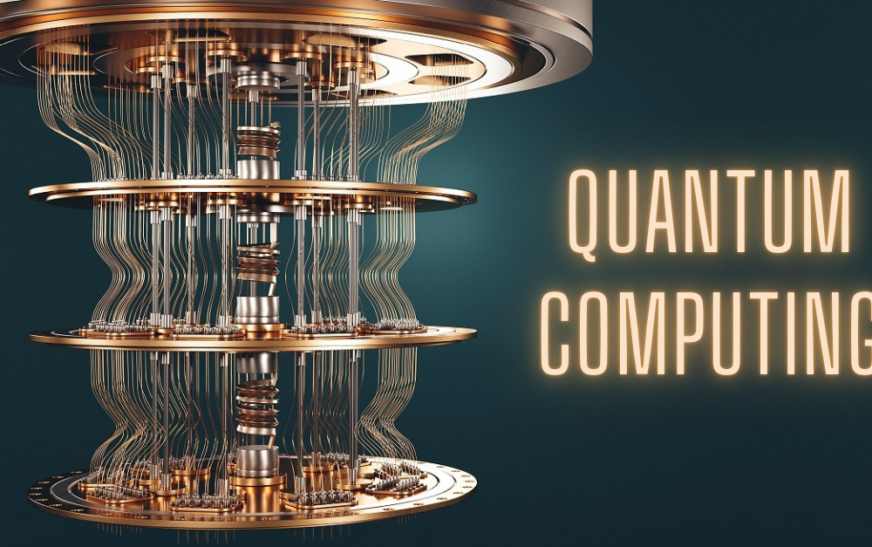
Imagine solving problems in seconds that would take today’s best supercomputers thousands of years. That’s the promise of quantum computing—and it’s not science fiction. While hardware often grabs the headlines, the real magic for beginners lies in the software. Quantum computing for beginners: the software angle is where you’ll find accessible tools, intuitive programming languages, and real-world applications that make this futuristic tech surprisingly approachable. Whether you’re a student, developer, or tech enthusiast, understanding the software side is your fastest path into the quantum world.
This guide cuts through the complexity. We’ll focus solely on the software ecosystem—how it works, what tools exist, and how you can start experimenting today—without getting lost in quantum physics jargon. No PhD required.
Why the Software Side Matters Most for Beginners
Most people think quantum computing is all about qubits, superconductors, and cryogenic chambers. While hardware is essential, it’s the software that turns theory into practice. For beginners, the software layer is the gateway. It abstracts away the mind-bending physics and lets you focus on logic, algorithms, and problem-solving.
Think of it like learning to code before building your own computer. You don’t need to understand silicon wafer fabrication to write a Python script. Similarly, you don’t need to master quantum mechanics to start coding quantum programs.
The software stack includes:
- Quantum programming languages (like Q#, Qiskit, and Cirq)
- Simulators that mimic quantum behavior on classical computers
- Development environments with drag-and-drop interfaces
- Cloud-based quantum processors you can access remotely
These tools lower the barrier to entry dramatically. You can run your first quantum program in under 10 minutes—no lab coat required.
Top Quantum Software Tools for Absolute Beginners
If you’re new to quantum computing, start with platforms designed for accessibility. These tools offer tutorials, visualizations, and community support to help you learn by doing.
1. IBM Quantum Experience (Qiskit)
IBM’s Qiskit is one of the most beginner-friendly quantum software frameworks. It’s open-source, Python-based, and backed by extensive documentation. You can write quantum circuits using simple code or drag-and-drop gates in the online composer.
Key features:
- Free access to real quantum hardware via the cloud
- Interactive Jupyter notebooks with step-by-step tutorials
- Active community and regular learning events
Even if you’ve never coded before, Qiskit’s “Hello, Quantum” tutorial walks you through creating your first quantum circuit in minutes.
2. Microsoft Quantum Development Kit (Q#)
Microsoft’s Q# language is built for developers who want a more structured, high-level approach. It integrates with Visual Studio and VS Code, making it familiar to software engineers.
While slightly more technical than Qiskit, Q# excels in teaching quantum algorithms through clear syntax and strong typing. It’s ideal if you’re coming from a classical programming background.
Bonus: Microsoft offers a free quantum Katacourse—a gamified learning path that teaches concepts through challenges.
3. Google Cirq
Developed by Google AI, Cirq is a Python library for writing, manipulating, and optimizing quantum circuits. It’s lightweight and designed for near-term quantum devices.
Cirq shines when simulating noisy intermediate-scale quantum (NISQ) hardware—the kind available today. It’s great for experimenting with variational algorithms and quantum machine learning.
Though less beginner-oriented than Qiskit, Cirq’s documentation includes clear examples and Colab notebooks you can run instantly in your browser.
4. Classiq and Strawberry Fields (Visual Platforms)
For those who prefer visual learning, platforms like Classiq and Strawberry Fields (by Xanadu) offer graphical interfaces to design quantum circuits.
Classiq uses a high-level modeling language—you describe what you want the circuit to do, and it automatically generates the optimal implementation. It’s like using Figma for quantum logic.
Strawberry Fields focuses on photonic quantum computing and includes interactive simulations perfect for exploring quantum optics concepts.
How Quantum Software Differs from Classical Programming
Quantum programming isn’t just “Python with qubits.” It requires a shift in mindset. Here’s how it’s fundamentally different:
1. Probabilistic Outcomes
Unlike classical bits (which are 0 or 1), qubits exist in superpositions. When you measure a qubit, you get a probability distribution—not a definite answer.
This means quantum programs often run multiple times (called “shots”) to estimate results. Your code must account for uncertainty and statistical noise.
2. Reversible Operations
Quantum gates are reversible—you can undo any operation. This contrasts with classical logic gates like AND or OR, which lose information.
Reversibility enables powerful algorithms like Grover’s search and Shor’s factorization, but it also imposes constraints on how you design circuits.
3. Entanglement and Interference
Quantum software leverages entanglement (where qubits share states) and interference (where probability waves cancel or amplify) to solve problems efficiently.
These phenomena don’t exist in classical computing. Your code must explicitly create and manipulate them—often through carefully timed gate sequences.
4. No Cloning Theorem
You cannot copy a qubit’s state. This prevents common debugging techniques like printing intermediate values.
Instead, developers use ancilla qubits (helper qubits) and post-selection to extract information without disturbing the system.
Getting Started: Your First Quantum Program
Let’s write a simple quantum program using Qiskit. This example creates a superposition and measures the result—your first taste of quantum behavior.
from qiskit import QuantumCircuit, execute, Aer

# Create a quantum circuit with 1 qubit and 1 classical bit
qc = QuantumCircuit(1, 1)

# Apply a Hadamard gate to create superposition
qc.h(0)

# Measure the qubit
qc.measure(0, 0)

# Simulate the circuit
simulator = Aer.get_backend('qasm_simulator')
result = execute(qc, simulator, shots=1000).result()
counts = result.get_counts(qc)
print(counts)
Run this code, and you’ll likely see output like {'0': 502, '1': 498}. That’s the power of superposition—your qubit was both 0 and 1 until measured.
This simple program introduces core concepts: qubits, gates, measurement, and simulation. From here, you can explore entanglement, quantum teleportation, or even basic algorithms.
Real-World Applications of Quantum Software (Even for Beginners)
You might think quantum computing is only for cryptography or drug discovery. While those are long-term goals, today’s software enables practical experiments in several areas.
Quantum Machine Learning
Libraries like PennyLane (by Xanadu) let you build hybrid quantum-classical neural networks. These models can process data in ways classical AI can’t—especially with quantum kernels or variational circuits.
Beginners can train simple classifiers on small datasets using quantum feature maps. It’s a great way to see quantum advantage in action.
Optimization Problems
Quantum Approximate Optimization Algorithm (QAOA) is a popular method for solving logistics, scheduling, and portfolio optimization tasks.
Using Qiskit or Cirq, you can model a simple traveling salesman problem and run it on a simulator. While not faster than classical methods yet, it’s a stepping stone to future breakthroughs.
Quantum Chemistry Simulations
Simulating molecules is exponentially hard for classical computers. Quantum software like OpenFermion (built on Cirq) lets you model small molecules like H₂ or LiH.
Even beginners can explore how electrons behave in atoms—laying the foundation for future materials science and pharmaceutical research.
Common Misconceptions About Quantum Software
Let’s clear up some myths that trip up newcomers.
Myth 1: You Need a Quantum Computer to Code
False. Most learning happens on simulators. Tools like Qiskit Aer or Google’s Quantum Engine let you emulate quantum behavior on your laptop.
Only advanced users need real hardware—and even then, cloud access makes it affordable.
Myth 2: Quantum Programming Is Only for Physicists
Not true. While physics helps, many quantum developers come from software, math, or engineering backgrounds.
The software layer is designed for programmers. Focus on logic, not equations.
Myth 3: Quantum Software Will Replace Classical Code
Unlikely. Quantum computers will likely work alongside classical systems—handling specific tasks like optimization or simulation.
Your future code might call a quantum subroutine, just like you use GPU acceleration today.
Learning Path: From Zero to Quantum Coder
Ready to dive in? Follow this step-by-step roadmap:
- Learn Python basics – Most quantum tools use Python. Spend a week on syntax, loops, and functions.
- Try Qiskit’s textbook – Free online resource with interactive exercises.
- Build simple circuits – Start with superposition, then add entanglement.
- Run on real hardware – Use IBM Quantum’s free tier to send jobs to real devices.
- Join a community – Reddit’s r/QuantumComputing or Discord groups offer support.
- Experiment with algorithms – Try Deutsch-Jozsa, Bernstein-Vazirani, or Grover’s search.
Within a month, you could be contributing to open-source quantum projects or prototyping your own ideas.
Key Takeaways
- Quantum computing for beginners: the software angle is the most practical entry point—no physics degree needed.
- Tools like Qiskit, Q#, and Cirq make quantum programming accessible with Python and cloud access.
- Quantum software differs from classical coding due to superposition, entanglement, and probabilistic outcomes.
- Beginners can simulate circuits, run algorithms, and even access real quantum processors online.
- Applications in machine learning, optimization, and chemistry are already within reach.
- Start small: learn Python, try a tutorial, and join a community to stay motivated.
FAQ
Do I need to understand quantum physics to use quantum software?
Not at first. Most beginner tools abstract the physics. Focus on learning how gates manipulate qubits and how algorithms work. You can dive deeper into theory later.
Can I run quantum programs on my laptop?
Yes! Simulators let you run quantum code on classical hardware. For small circuits (under 30 qubits), your laptop is perfectly capable.
Is quantum software free to use?
Most major platforms—including IBM, Google, and Microsoft—offer free tiers for learning and experimentation. You only pay if you need advanced resources or commercial support.
Quantum computing is no longer confined to research labs. With the right software tools, anyone can start exploring this revolutionary technology today. The future of computing isn’t just about faster chips—it’s about smarter code. And you can be part of it.