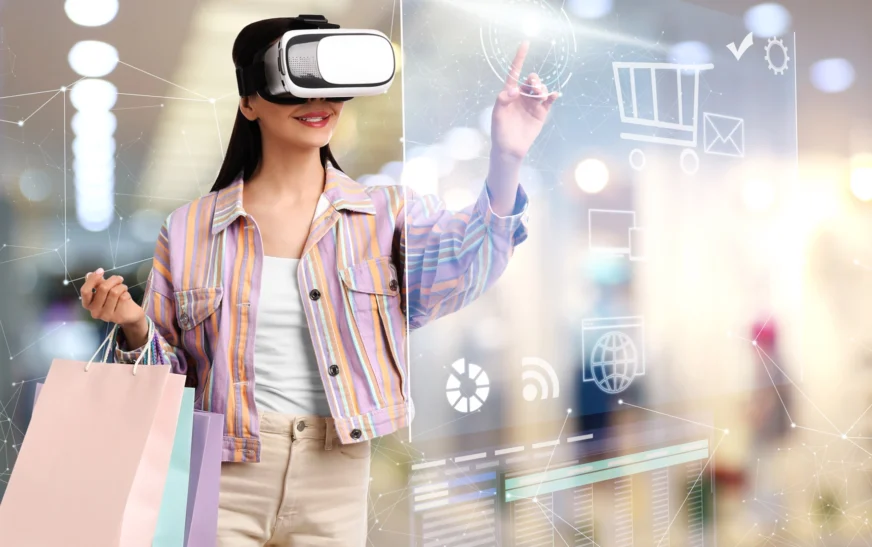
Imagine trying on a pair of sunglasses without leaving your couch, or seeing how that new sofa fits in your living room—before you even click “buy.” That’s not science fiction. It’s the reality of augmented reality in online shopping, and it’s transforming the way we browse, decide, and purchase products online. No more guessing sizes, colors, or styles. AR brings the store to your screen—and now, right into your space.
With smartphone cameras and AR-powered apps, retailers are bridging the gap between digital convenience and physical experience. Customers can visualize products in real time, reducing uncertainty and boosting confidence in their purchases. From fashion to furniture, beauty to electronics, augmented reality shopping experiences are no longer a luxury—they’re becoming the standard.
This shift isn’t just about flashy tech. It’s solving real problems: high return rates, low conversion, and customer hesitation. By letting users interact with products virtually, brands are creating more engaging, personalized, and satisfying shopping journeys. And the numbers don’t lie—businesses using AR see up to 40% higher conversion rates and significantly fewer returns.
Why Augmented Reality is Revolutionizing E-Commerce
Traditional online shopping has always had a major flaw: you can’t touch, feel, or try before you buy. That uncertainty leads to hesitation, abandoned carts, and costly returns. Augmented reality in online shopping eliminates these barriers by overlaying digital product models onto the real world through your device’s camera.
Think of it as a virtual try-before-you-buy system. Whether you’re placing a lamp on your desk or testing lipstick shades on your face, AR gives you a realistic preview. This immersive experience builds trust and reduces the cognitive load of decision-making. Customers no longer have to imagine—they can see.
Moreover, AR enhances personalization. Algorithms can suggest products based on your environment or preferences, creating a tailored shopping experience. For example, an AR app might recommend a rug that matches your room’s color scheme or a jacket that complements your body type. This level of customization was impossible just a few years ago.
Retailers are also using AR to create interactive product demos. Instead of static images or videos, customers can rotate, resize, and interact with 3D models. This deeper engagement keeps users on product pages longer and increases the likelihood of purchase.
The Psychology Behind AR Shopping
Why does AR work so well? It taps into fundamental human psychology. When we see a product in our own space, our brain processes it as “real” and “relevant.” This sense of ownership—even if temporary—triggers emotional engagement and reduces perceived risk.
Studies show that visualizing a product in context increases perceived value and purchase intent. For instance, seeing a watch on your wrist feels more personal than viewing it on a model. This emotional connection drives conversions and brand loyalty.
AR also reduces decision fatigue. Instead of scrolling through dozens of options, users can quickly test a few and make confident choices. This streamlined process improves user experience and satisfaction.
Real-World Applications of AR in Online Retail
AR isn’t just a futuristic concept—it’s already here, and major brands are leading the charge. From global giants to niche startups, companies across industries are integrating augmented reality shopping experiences into their platforms.
Fashion & Apparel
Clothing retailers like Zara, H&M, and ASOS have launched AR fitting rooms. Using your phone’s front camera, you can see how clothes look on your body in real time. Some apps even simulate fabric movement and fit based on your measurements.
Shoe brands like Nike and Adidas use AR to let customers “try on” sneakers. Point your camera at your feet, and the app overlays the shoes onto your image. You can walk around, check the style, and even see how they look with different outfits.
Accessories aren’t left out. Sunglass brands like Ray-Ban offer virtual try-ons, allowing users to test multiple frames instantly. This eliminates the need to visit a store or order samples.
Home & Furniture
IKEA’s AR app, IKEA Place, lets users place true-to-scale 3D models of furniture in their homes. You can see how a bookshelf fits next to your wall or whether a coffee table matches your décor. The app uses advanced spatial recognition to ensure accurate placement.
Other home brands like Wayfair and Houzz have similar tools. These apps reduce the fear of buying oversized or mismatched items. Customers can experiment with layouts, colors, and styles without lifting a finger.
Lighting and décor brands also benefit. AR helps users visualize how a lamp will illuminate a room or how a painting will look on a specific wall. This level of detail builds confidence in high-consideration purchases.
Beauty & Cosmetics
Makeup shopping has been revolutionized by AR. Brands like Sephora, L’Oréal, and Estée Lauder offer virtual makeup try-ons. Using facial recognition, their apps apply lipstick, eyeshadow, and foundation in real time.
Users can test hundreds of shades without touching a single product. This is especially valuable for online shoppers who can’t visit a counter. It also reduces hygiene concerns and product waste.
Some apps go further, offering personalized recommendations based on skin tone, undertones, and preferences. This AI-powered personalization enhances the shopping experience and increases customer satisfaction.
Electronics & Gadgets
Tech companies are using AR to showcase product features and functionality. For example, Apple’s AR Quick Look lets users view iPhones, iPads, and Macs in their environment. You can see the size, design, and even interact with the interface.
Smart home brands like Philips Hue use AR to demonstrate how lighting systems work. Users can visualize different color schemes and lighting effects in their actual rooms.
AR also helps explain complex products. Instead of reading a manual, customers can see a 3D animation of how a device operates. This improves understanding and reduces post-purchase confusion.
How AR Boosts Sales and Reduces Returns
One of the biggest challenges in e-commerce is high return rates. Clothing returns alone cost retailers billions annually, often due to fit, color, or style mismatches. Augmented reality in online shopping directly addresses this issue.
When customers can see how a product looks on them or in their space, they’re less likely to be disappointed upon delivery. This leads to fewer returns, lower operational costs, and higher customer satisfaction.
Retailers report that AR users are more likely to complete a purchase. The interactive experience keeps them engaged longer and reduces cart abandonment. In fact, some studies show that AR can increase conversion rates by up to 90% for certain product categories.
AR also improves customer loyalty. When shoppers have a positive, personalized experience, they’re more likely to return and recommend the brand. This builds long-term value beyond a single sale.
For businesses, AR is a competitive advantage. Early adopters stand out in crowded markets and position themselves as innovative and customer-centric. As AR technology becomes more accessible, it will soon be a necessity—not a novelty.
Case Study: Warby Parker
Warby Parker, the eyewear brand, was an early pioneer in AR shopping. Their virtual try-on feature lets users test hundreds of frames using their smartphone camera. The app uses facial mapping to ensure accurate fit and style.
Since launching AR, Warby Parker saw a significant drop in return rates and a boost in online sales. Customers appreciated the ability to “try before they buy” without visiting a store. The feature also increased social sharing, as users posted selfies with different glasses.
This success inspired other brands to follow suit. Today, virtual try-ons are standard in the eyewear industry, proving the lasting impact of AR innovation.
The Technology Behind AR Shopping
How does augmented reality work in online shopping? It combines computer vision, 3D modeling, and real-time rendering to overlay digital content onto the physical world.
Most AR shopping apps use your smartphone’s camera and sensors to detect surfaces, lighting, and perspective. Advanced algorithms then place a 3D model of the product in your environment, adjusting for scale, angle, and shadows.
Some platforms use markerless AR, which doesn’t require QR codes or special images. Instead, it relies on SLAM (Simultaneous Localization and Mapping) technology to understand the space and anchor virtual objects.
Cloud computing plays a key role. Product models are stored and rendered in the cloud, ensuring fast loading and high-quality visuals. This also allows for real-time updates and personalization.
AI enhances the experience by analyzing user behavior and preferences. For example, an AR app might suggest a different color based on your past purchases or browsing history. This creates a smarter, more intuitive shopping journey.
As 5G networks expand, AR experiences will become even smoother and more responsive. Lower latency and higher bandwidth will enable real-time interactions and richer content, making AR shopping feel seamless and natural.
Challenges and Limitations of AR in E-Commerce
Despite its benefits, augmented reality in online shopping isn’t without challenges. One major hurdle is device compatibility. Not all smartphones support advanced AR features, especially older models.
User adoption is another concern. Some customers are hesitant to use AR due to privacy fears or lack of familiarity. Brands must educate users and ensure transparency about data usage.
Creating high-quality 3D models is time-consuming and expensive. Small businesses may struggle to produce accurate, lifelike representations of their products. However, new tools and platforms are making 3D modeling more accessible and affordable.
AR also requires strong internet connectivity. In areas with poor coverage, the experience may lag or fail entirely. This limits accessibility for some users.
Finally, there’s the risk of over-reliance on technology. If AR models don’t match the real product, it can lead to disappointment and distrust. Brands must ensure accuracy and consistency across all touchpoints.
Overcoming the Barriers
To succeed, retailers must focus on simplicity and reliability. AR features should be easy to use, with clear instructions and minimal setup. Integration with existing platforms—like Shopify or WooCommerce—can streamline adoption.
Investing in user education is crucial. Tutorials, demos, and customer support can help users feel comfortable with AR. Highlighting privacy protections and data security builds trust.
Collaborating with AR development platforms can reduce costs and speed up implementation. Companies like 8thWall, Zappar, and Threekit offer plug-and-play solutions for e-commerce sites.
The Future of Augmented Reality in Online Shopping
The future of augmented reality shopping experiences is bright—and rapidly evolving. As technology improves, AR will become more immersive, intelligent, and integrated into everyday life.
We’re already seeing the rise of AR glasses, like Apple’s Vision Pro and Meta’s Ray-Bans. These devices will allow users to shop in AR without holding a phone. Imagine walking through your home and seeing product suggestions appear in your field of view.
Social commerce will also benefit. Platforms like Instagram and TikTok are integrating AR filters for shopping. Users can try on products during live streams or while watching influencer content, then purchase with a single tap.
AI will play a bigger role, enabling hyper-personalized AR experiences. Virtual stylists could recommend outfits based on your wardrobe, weather, and calendar events. Smart mirrors in stores might suggest complementary items as you try on clothes.
AR will also expand beyond visuals. Haptic feedback could simulate texture and weight, while spatial audio might enhance product demos. These multisensory experiences will make online shopping feel even more real.
As AR becomes mainstream, it will redefine customer expectations. Shoppers will demand immersive, interactive experiences as standard. Brands that fail to adapt risk falling behind.
Key Takeaways
- Augmented reality in online shopping allows customers to visualize products in their real environment, reducing uncertainty and increasing confidence.
- AR is widely used in fashion, furniture, beauty, and electronics, with apps enabling virtual try-ons, 3D product placement, and interactive demos.
- Retailers using AR see higher conversion rates, lower return rates, and improved customer satisfaction.
- Technology behind AR includes 3D modeling, computer vision, AI, and cloud rendering, with 5G enhancing performance.
- Challenges include device compatibility, user adoption, and production costs, but solutions are emerging.
- The future includes AR glasses, social commerce integration, and multisensory experiences, making online shopping more immersive than ever.
FAQ
How does augmented reality work in online shopping?
Augmented reality overlays digital product models onto the real world using your smartphone or tablet camera. It uses sensors and algorithms to place 3D objects in your environment, allowing you to see how they look and fit in real time.
Which brands use AR for online shopping?
Many major brands use AR, including IKEA (furniture), Sephora (makeup), Warby Parker (eyewear), Nike (shoes), and Apple (electronics). Even platforms like Amazon and Shopify offer AR tools for merchants.
Is AR shopping safe and private?
Yes, reputable AR apps prioritize user privacy. They typically don’t store personal data or images. Always check the app’s privacy policy and use trusted platforms to ensure your information is protected.
Final Thoughts
Augmented reality in online shopping is more than a trend—it’s a fundamental shift in how we interact with products and brands. By blending the digital and physical worlds, AR creates richer, more confident, and more enjoyable shopping experiences.
For consumers, it means less guesswork and more satisfaction. For businesses, it means higher sales, lower costs, and stronger customer relationships. As the technology matures, AR will become an essential part of the e-commerce ecosystem.
The future of shopping isn’t just online or offline—it’s both. And augmented reality is the bridge that connects them.