The short answer? No, AI will not replace software engineers—at least not entirely. But it will transform the role in ways we’re only beginning to understand. While headlines scream about automation and job displacement, the reality is more nuanced. AI is becoming a powerful tool in a developer’s toolkit, not a replacement for human ingenuity, problem-solving, and creativity. If you’re a software engineer—or aspiring to be one—you don’t need to panic. Instead, you need to adapt.
This article dives deep into the current state of AI in software development, separates hype from reality, and explains why human engineers remain irreplaceable—even as AI tools grow smarter. We’ll explore how AI is changing workflows, what skills are becoming more valuable, and how developers can future-proof their careers. Whether you’re coding your first app or leading a dev team, understanding this shift is critical.
The Rise of AI in Software Development
Over the past few years, AI-powered coding assistants like GitHub Copilot, Amazon CodeWhisperer, and Tabnine have exploded in popularity. These tools use large language models (LLMs) trained on billions of lines of public code to suggest functions, autocomplete blocks, and even generate entire scripts from natural language prompts.
Imagine typing: “Create a function that validates an email address,” and getting a fully working, well-commented JavaScript function in seconds. That’s no longer science fiction—it’s happening today. AI can now handle repetitive tasks like boilerplate code generation, bug detection, and unit test writing with surprising accuracy.
But here’s the catch: AI doesn’t understand context, business logic, or user experience the way a human does. It can write code, but it can’t reason about why that code matters. It can’t debug a system failure caused by a race condition in a distributed microservice architecture. And it certainly can’t negotiate requirements with stakeholders or design a scalable system from scratch.
What AI Can (and Can’t) Do for Developers
Let’s break it down. AI excels at pattern recognition and task automation—especially when the input is clear and the output is well-defined. That makes it ideal for:
- Code autocompletion: Speeding up typing and reducing syntax errors.
- Boilerplate generation: Creating standard CRUD operations, API endpoints, or UI components.
- Bug detection: Flagging potential security flaws or performance issues using static analysis.
- Test case generation: Writing unit and integration tests based on existing code.
- Documentation: Summarizing functions or generating README files.
However, AI struggles with higher-level engineering challenges. It can’t:
- Understand ambiguous or evolving project requirements.
- Make architectural decisions based on long-term scalability or team constraints.
- Debug complex, multi-layered systems where the root cause isn’t obvious.
- Collaborate with cross-functional teams or manage technical debt strategically.
- Ethically evaluate the impact of software on users or society.
In short, AI is a brilliant assistant—but not a replacement for the engineer who guides it.
The Human Edge: Why Software Engineers Are Still Essential
Software engineering isn’t just about writing code. It’s about solving problems. And problem-solving requires empathy, creativity, and judgment—qualities AI hasn’t mastered.
Consider this: when a client says, “I want an app that helps small farmers track crop yields,” an AI can’t interpret what that really means. A human engineer asks follow-up questions. They visit farms, observe workflows, and identify pain points. They decide whether to use GPS, satellite imagery, or manual input. They weigh trade-offs between accuracy, usability, and cost.
Then there’s system design. Building a reliable, secure, and scalable application involves countless decisions: database choice, caching strategy, API design, error handling, monitoring. These aren’t just technical—they’re strategic. And they require experience, intuition, and foresight.
Even in debugging, human engineers shine. AI might spot a null pointer exception, but it won’t trace how a third-party API change caused a cascade failure across services. That kind of detective work demands deep system knowledge and critical thinking.
AI as a Force Multiplier, Not a Job Killer
The most accurate way to view AI in software development is as a force multiplier. It doesn’t eliminate jobs—it changes how developers work, making them faster, more efficient, and more productive.
Think of it like the introduction of compilers, version control, or IDEs. Each innovation automated parts of the development process, but didn’t erase the need for engineers. Instead, it raised the bar—developers could focus on higher-value tasks.
Today, AI is doing the same. Junior developers can now generate functional code faster, reducing the learning curve. Senior engineers spend less time on repetitive tasks and more on architecture, mentoring, and innovation.
Companies aren’t laying off engineers because of AI. They’re hiring more—because AI enables them to build more software, faster. According to a 2023 Stack Overflow survey, 44% of developers already use AI tools in their workflow, and 70% believe these tools improve productivity.
The Skills That Will Matter More Than Ever
If AI handles the “how” of coding, human engineers must master the “why.” The most valuable skills in the AI era aren’t just technical—they’re cognitive and collaborative.
1. Problem Definition and Requirements Gathering
AI can’t interpret vague or conflicting stakeholder needs. Engineers who can translate business goals into technical specs will be in high demand.
2. System Architecture and Design Thinking
Designing scalable, maintainable systems requires deep understanding of trade-offs. AI can suggest patterns, but humans must choose the right one.
3. Debugging and Root Cause Analysis
Complex systems fail in complex ways. The ability to diagnose and fix issues across layers—network, database, application—remains uniquely human.
4. Communication and Collaboration
Engineers work with product managers, designers, QA testers, and clients. Clear communication, empathy, and teamwork can’t be automated.
5. Ethical and Security Awareness
As software impacts more lives, engineers must consider privacy, bias, and security. AI can’t make moral judgments—humans must.
6. Continuous Learning and Adaptability
Technology evolves fast. The best engineers stay curious, learn new tools, and adapt to change—whether it’s AI, cloud platforms, or new frameworks.
Real-World Examples: AI in Action
Let’s look at how companies are actually using AI—not to replace engineers, but to empower them.
Microsoft: With GitHub Copilot, developers report writing code 55% faster on average. But Microsoft emphasizes that Copilot is a co-pilot, not a pilot. Engineers still review, test, and refine suggestions.
Netflix: Uses AI to optimize video encoding and recommend content, but its engineering teams design and maintain the underlying infrastructure. AI handles optimization; humans handle strategy.
Stripe: Leverages AI for fraud detection, but its engineers build the systems that process millions of transactions securely and reliably. AI flags anomalies; humans investigate and respond.
These examples show a consistent pattern: AI automates routine tasks, freeing engineers to focus on innovation, reliability, and user experience.
Myths vs. Reality: Debunking Common Fears
Let’s clear up some misconceptions fueling anxiety about AI replacing software engineers.
Myth: “AI will write entire apps by itself.”
Reality: AI can generate code snippets, but building a full application requires planning, integration, testing, and iteration—tasks that demand human oversight.
Myth: “Junior developers will become obsolete.”
Reality: AI lowers the barrier to entry, helping juniors learn faster. But mentorship, code reviews, and real-world problem-solving still require experienced engineers.
Myth: “Companies will hire fewer engineers.”
Reality: Demand for software continues to grow. AI enables companies to scale development without linearly increasing headcount—but they still need skilled engineers to lead projects.
Myth: “AI understands code better than humans.”
Reality: AI predicts code based on patterns, not understanding. It can’t reason about intent, edge cases, or long-term maintainability.
How Software Engineers Can Thrive in the AI Era
The future belongs to engineers who embrace AI as a partner, not a threat. Here’s how to stay ahead:
- Learn to use AI tools effectively: Master GitHub Copilot, ChatGPT for coding, and other assistants. Know their strengths and limitations.
- Focus on high-level thinking: Spend less time on syntax, more on architecture, design, and problem-solving.
- Improve soft skills: Communication, leadership, and collaboration will set you apart.
- Stay curious: Keep learning new languages, frameworks, and paradigms. AI changes fast—so should you.
- Contribute to open source: Building public projects improves your visibility and skills, and helps train future AI models.
- Understand AI ethics: As AI becomes more embedded in software, engineers must advocate for fairness, transparency, and accountability.
Key Takeaways
- AI will not replace software engineers—but it will change how they work.
- AI excels at automating repetitive coding tasks, but lacks human judgment, creativity, and contextual understanding.
- Software engineering is more than writing code—it’s about solving problems, designing systems, and collaborating with people.
- The most valuable engineers in the AI era will be those who combine technical skill with critical thinking, communication, and adaptability.
- Embrace AI as a tool to boost productivity, not a threat to your career.
FAQ: Will AI Replace Software Engineers?
Q1: Will AI eliminate the need for software engineers in the next 10 years?
A: No. While AI will automate certain coding tasks, the demand for skilled engineers is expected to grow. Complex system design, debugging, security, and user experience require human insight that AI cannot replicate.
Q2: Should I still become a software engineer if AI is getting so advanced?
A: Absolutely. The field is evolving, not disappearing. AI makes development faster and more accessible, opening doors for more people to enter tech. Engineers who adapt and leverage AI will have a competitive edge.
Q3: Can AI write production-ready code without human intervention?
A: Not reliably. AI-generated code often requires review, testing, and refinement. It may contain bugs, security flaws, or inefficiencies. Human engineers are essential for ensuring code quality, scalability, and maintainability.
Final Thoughts: The Future Is Human-AI Collaboration
The fear of AI replacing software engineers is understandable—but misplaced. History shows that technology doesn’t eliminate jobs; it transforms them. The printing press didn’t end the need for writers. The internet didn’t kill journalism. And AI won’t erase software engineering.
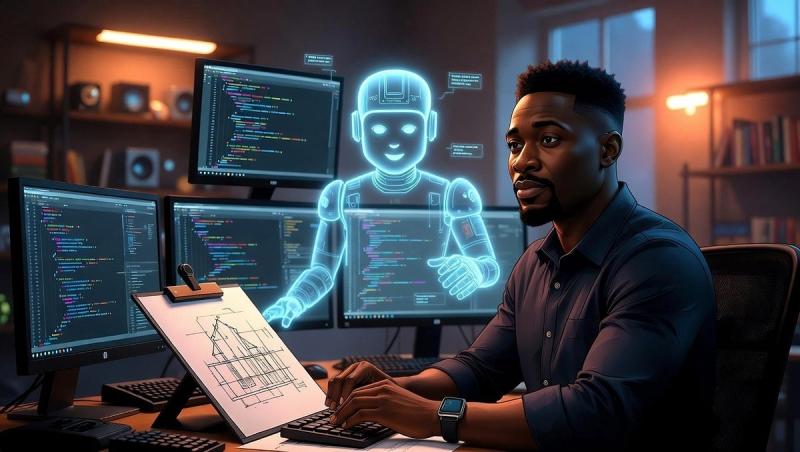
Instead, we’re entering an era of human-AI collaboration. Engineers who learn to work alongside AI—using it to accelerate development while applying their own creativity and judgment—will thrive.
The real question isn’t “Will AI replace software engineers?” It’s “How can software engineers use AI to build better, faster, and smarter?”
The answer lies not in resistance, but in adaptation. The future of software development isn’t human or machine. It’s human and machine—working together to solve the world’s most pressing challenges.
So keep coding. Keep learning. And keep leading. The engineer’s role isn’t disappearing. It’s evolving—and it’s more important than ever.