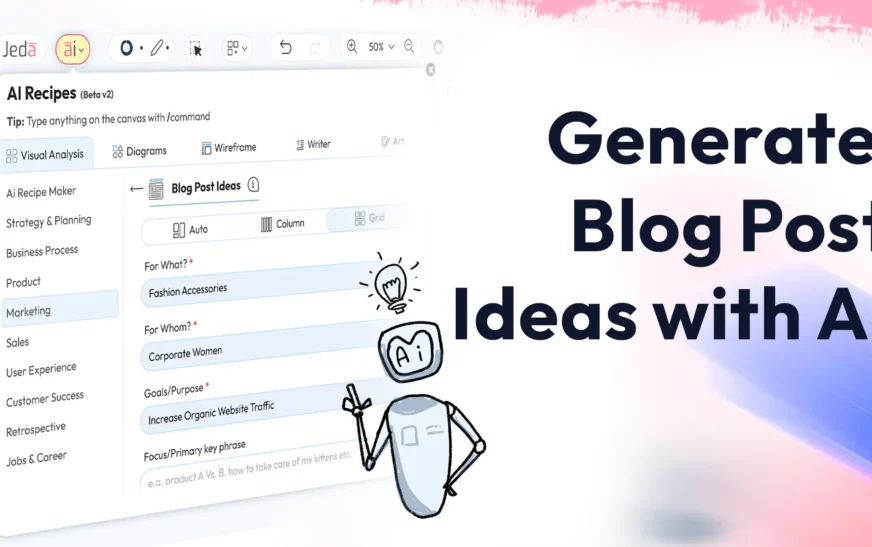
Struggling to create SEO-optimized articles that actually rank on Google? You’re not alone. With search algorithms getting smarter and competition fiercer than ever, writing content that stands out requires more than just keyword stuffing. The good news? AI tools can help you write SEO-optimized articles faster, smarter, and with better results—if you know how to use them the right way. In this guide, we’ll walk you through exactly how to leverage AI writing assistants, keyword research tools, and content optimization platforms to craft high-performing, search-engine-friendly articles that attract real readers and boost your rankings.
Why AI Tools Are Game-Changers for SEO Content Creation
Gone are the days when SEO writing meant manually researching keywords, drafting outlines, and tweaking meta descriptions one by one. Today, AI-powered tools streamline the entire content creation process—from idea generation to final publication. These tools analyze top-ranking pages, suggest semantic keywords, check readability, and even generate full drafts in seconds.
But here’s the catch: AI doesn’t replace human creativity—it enhances it. When used strategically, AI tools help you produce content that’s not only optimized for search engines but also engaging, accurate, and tailored to your audience’s intent. Whether you’re a blogger, marketer, or business owner, integrating AI into your SEO workflow can save hours of work while improving content quality and performance.
Step 1: Choose the Right AI Writing Tool for SEO
Not all AI writing tools are created equal—especially when it comes to SEO. Some focus on creative storytelling, while others are built specifically for search optimization. For SEO-focused content, look for tools that offer:
- Keyword integration suggestions – Real-time prompts to include target and related keywords naturally.
- Content structure guidance – Automatic H2/H3 suggestions, bullet points, and paragraph breaks for better readability.
- SEO scoring – Built-in analyzers that grade your content based on keyword usage, readability, and structure (e.g., Surfer SEO, Clearscope, or Frase).
- Competitor analysis – Insights into what top-ranking articles are doing right.
Popular AI tools like Jasper, Writesonic, and Copy.ai offer strong SEO features, but for maximum optimization, pair them with dedicated SEO platforms like Surfer SEO or MarketMuse. These tools don’t just generate text—they guide you toward content that matches Google’s ranking criteria.
Step 2: Conduct Smart Keyword Research with AI
Before writing a single word, you need to know what your audience is searching for. AI tools can supercharge your keyword research by analyzing search trends, identifying long-tail variations, and uncovering semantic keywords that boost topical relevance.
Start by entering your main keyword (e.g., “how to use AI tools to write SEO-optimized articles”) into an AI-powered keyword tool like AnswerThePublic, SEMrush, or Ahrefs. These platforms use AI to pull related questions, search volume data, and keyword difficulty scores.
Look for:
- Low-competition, high-intent keywords – These are easier to rank for and often convert better.
- LSI (Latent Semantic Indexing) keywords – Words and phrases related to your main topic (e.g., “AI content generators,” “SEO writing tips,” “on-page optimization”).
- Question-based queries – People are increasingly using natural language searches (e.g., “Can AI write SEO articles?”).
AI tools can also cluster keywords into topic groups, helping you build comprehensive content hubs that cover a subject in depth—a strategy Google rewards with higher rankings.
Step 3: Use AI to Create a Winning Content Outline
A well-structured outline is the backbone of any high-ranking article. Instead of staring at a blank page, use AI to generate a detailed, SEO-friendly outline based on top-performing content.
Simply input your target keyword into an AI tool like Frase or Content at Scale, and it will analyze the top 10 Google results to suggest headings, subheadings, and key points to include. This ensures your article covers all the topics users and search engines expect.
For example, if you’re writing about “how to use AI tools to write SEO-optimized articles,” your AI-generated outline might include:
- Introduction: Why AI is essential for modern SEO
- Top AI tools for SEO content creation
- How to integrate keywords naturally with AI
- Optimizing structure and readability
- Common mistakes to avoid
- Conclusion: The future of AI in SEO
This approach not only saves time but also increases your chances of ranking by matching the depth and structure of top content.
Step 4: Write with AI—But Keep It Human
Now it’s time to draft your article. AI writing tools can generate full paragraphs, introductions, or even entire articles in seconds. But remember: Google prioritizes E-E-A-T (Experience, Expertise, Authoritativeness, Trustworthiness), so your content must feel authentic and valuable—not robotic.
Use AI to:
- Generate first drafts quickly
- Expand on bullet points or ideas
- Rephrase sentences for clarity and flow
- Suggest engaging hooks or conclusions
However, always review and edit the output. Add personal insights, real-world examples, and a conversational tone. For instance, instead of writing, “AI tools improve content efficiency,” try: “I used to spend hours tweaking meta descriptions—now my AI tool does it in seconds, and my bounce rate dropped by 30%.”
This blend of AI speed and human touch creates content that ranks and resonates.
Step 5: Optimize On-Page SEO Elements with AI
Great content isn’t enough—you need to optimize every on-page element for search engines. AI tools can help you fine-tune:
Title Tags and Meta Descriptions
Use AI to generate compelling, keyword-rich titles and meta descriptions that improve click-through rates. Tools like CoSchedule Headline Analyzer or Portent’s Title Maker suggest high-performing variations based on emotional triggers and keyword placement.
Header Tags (H2, H3)
AI can recommend optimal header structures that improve readability and SEO. Ensure each H2 includes your main or LSI keywords naturally.
Internal and External Linking
Some AI tools suggest relevant internal links to boost site authority and external links to authoritative sources (e.g., Google Search Central, Moz). This signals to Google that your content is well-researched and trustworthy.
Image Optimization
Don’t forget visuals! Use AI-powered image tools like Canva’s Magic Resize or Adobe Firefly to create engaging graphics. Then, optimize file names (e.g., “ai-tools-seo-article.jpg”) and add descriptive alt text with keywords.
Step 6: Check Readability and SEO Score
Even the best content won’t rank if it’s hard to read. AI tools can analyze your article’s readability using metrics like Flesch Reading Ease, sentence length, and passive voice usage.
Aim for:
- Short paragraphs (2–3 sentences max)
- Simple, active voice
- Varied sentence lengths
- Bullet points and numbered lists for scannability
Run your draft through tools like Grammarly (for clarity) and Surfer SEO (for SEO score). These platforms give real-time feedback and suggest improvements—like adding a missing keyword or shortening a long sentence.
Pro tip: Target an SEO score of 90+ on Surfer SEO. It’s not just about hitting keywords—it’s about matching the content depth and structure of top-ranking pages.
Step 7: Avoid These Common AI SEO Mistakes
While AI is powerful, misusing it can hurt your rankings. Avoid these pitfalls:
- Over-optimizing keywords – Stuffing your article with keywords sounds spammy and triggers Google’s filters. Use keywords naturally and focus on user intent.
- Publishing AI content without editing – Raw AI output often lacks nuance, accuracy, or brand voice. Always fact-check and refine.
- Ignoring user experience – SEO isn’t just about algorithms. If readers bounce quickly, your rankings will drop. Make content engaging and useful.
- Using the same AI tool for everything – Different tools excel at different tasks. Combine keyword research (Ahrefs), writing (Jasper), and optimization (Surfer) for best results.
Key Takeaways: Master AI-Driven SEO Writing
- AI tools can write SEO-optimized articles faster – but only when guided by strategy and human insight.
- Start with keyword research and competitor analysis to understand what ranks.
- Use AI to generate outlines and drafts, then edit for authenticity and readability.
- Optimize every on-page element—title, headers, links, images—with AI assistance.
- Always prioritize user experience and E-E-A-T over keyword density.
- Avoid common mistakes like keyword stuffing and unedited AI content.
FAQ: Your Questions About AI and SEO Articles, Answered
Can AI really write SEO-optimized articles that rank?
Yes—but not on its own. AI tools can generate well-structured, keyword-rich content, but human oversight is essential for accuracy, tone, and originality. The best results come from combining AI efficiency with human expertise.
Which AI tool is best for SEO content writing?
It depends on your needs. Jasper and Writesonic are great for drafting, while Surfer SEO and Frase excel at optimization and competitor analysis. Many pros use a combination for maximum impact.
Will Google penalize me for using AI to write articles?
No—Google doesn’t penalize AI content outright. However, it does penalize low-quality, unoriginal, or spammy content. Focus on creating valuable, well-researched articles, and you’ll be fine. In fact, Google encourages the use of AI as long as it enhances user experience.
Final Thoughts: The Future of SEO Is AI-Powered
The way we write SEO content is evolving—and AI is leading the charge. By using AI tools to research, outline, draft, and optimize your articles, you can produce high-quality, search-engine-friendly content at scale. But remember: AI is a partner, not a replacement. The most successful SEO writers blend machine speed with human creativity, insight, and strategy.
So go ahead—try an AI tool today. Write that article. Optimize it. Publish it. And watch your rankings rise. The future of SEO isn’t just automated—it’s smarter, faster, and more effective than ever.