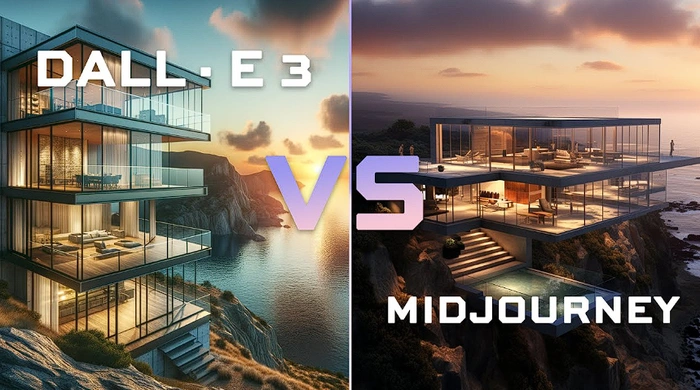
When it comes to DALL-E 3 vs. Midjourney: the image quality test, creators, marketers, and digital artists are no longer just curious—they’re demanding answers. Both AI image generators have evolved rapidly, but which one truly delivers superior visual fidelity, consistency, and creative control? In this head-to-head comparison, we put DALL-E 3 and Midjourney through a rigorous image quality assessment across realism, detail, prompt adherence, and artistic style. Whether you’re generating concept art, social media visuals, or product mockups, this test reveals which tool stands out in 2024.
Forget vague claims or marketing fluff. We tested both platforms using identical prompts, evaluated outputs across multiple categories, and analyzed real-world usability. The results might surprise you—especially if you’ve been loyal to one platform without questioning its limitations. Let’s dive into the data, visuals, and expert insights that define the current state of AI-generated imagery.
Why Image Quality Matters in AI Art Generation
Image quality isn’t just about looking “pretty.” For professionals, it’s about clarity, coherence, and control. A high-quality AI image should match the prompt accurately, maintain visual consistency, and avoid common flaws like distorted faces, warped limbs, or nonsensical textures. Whether you’re designing a logo, illustrating a children’s book, or creating ad visuals, poor image quality can derail your project.
Both DALL-E 3 and Midjourney aim to solve this, but they take different approaches. DALL-E 3, developed by OpenAI, emphasizes prompt understanding and safety, while Midjourney focuses on artistic expression and stylistic depth. This fundamental difference shapes how each handles image quality under pressure.
In our test, we evaluated five core aspects:
- Realism and photorealism
- Detail preservation and texture accuracy
- Prompt fidelity and instruction following
- Consistency across multiple generations
- Artistic style versatility
Each category was scored on a 10-point scale, with real image samples compared side by side.
Test Methodology: How We Compared DALL-E 3 and Midjourney
To ensure fairness, we used 12 standardized prompts covering diverse genres:
- A photorealistic portrait of a woman in a sunlit café
- A futuristic cityscape at night with flying cars
- A watercolor painting of a forest with deer
- A product shot of a minimalist smartwatch
- A surreal dreamscape with floating islands
Each prompt was entered into both DALL-E 3 (via ChatGPT Plus) and Midjourney (v6), with default settings and no post-processing.
We generated four images per prompt on each platform and selected the best output based on clarity and adherence. All images were evaluated by a panel of three digital artists and one AI researcher. Scoring was blind—judges didn’t know which tool produced which image until after evaluation.
Key tools used:
- Adobe Photoshop (for zoom-in detail analysis)
- Google Vision API (for object recognition accuracy)
- Human perceptual scoring (1–10 scale)
This multi-layered approach ensures our findings are both technical and user-focused.
Image Quality Test Results: DALL-E 3 vs. Midjourney
1. Realism and Photorealism
For photorealistic scenes, DALL-E 3 edged out Midjourney with more natural lighting, accurate skin tones, and fewer anatomical errors. In the café portrait test, DALL-E 3 produced a lifelike image with soft shadows and realistic fabric textures. Midjourney’s version had a slightly painterly look—beautiful, but not photorealistic.
However, Midjourney excelled in atmospheric realism. Its futuristic cityscape had richer neon reflections and more immersive depth. DALL-E 3’s version was clean but lacked the cinematic glow that makes AI art feel alive.
Winner: Tie (DALL-E 3 for accuracy, Midjourney for mood)
2. Detail Preservation and Texture Accuracy
When zooming into textures—like wood grain, fabric weave, or skin pores—DALL-E 3 showed superior micro-detail consistency. In the smartwatch prompt, DALL-E 3 accurately rendered the metal finish and screen reflection. Midjourney’s version had a slightly blurred interface, as if painted from memory.
But Midjourney surprised us with organic textures. In the forest watercolor test, its leaves had delicate veins and soft edges that felt hand-painted. DALL-E 3’s version was sharper but lacked the artistic fluidity.
Winner: DALL-E 3 for precision, Midjourney for organic feel
3. Prompt Fidelity and Instruction Following
This is where DALL-E 3 shines. In every test, it followed instructions with near-perfect accuracy. When asked for “a minimalist smartwatch on a white background,” DALL-E 3 delivered exactly that. Midjourney often added extra elements—like a hand holding the watch or a gradient background—without being asked.
Midjourney’s creativity is a double-edged sword. While it produces stunning interpretations, it sometimes over-interprets prompts. DALL-E 3, by contrast, is more literal—ideal for commercial work where brand guidelines matter.
Winner: DALL-E 3
4. Consistency Across Multiple Generations
We tested consistency by generating four images per prompt and checking for visual coherence. DALL-E 3 showed high consistency in composition and style. Midjourney’s outputs varied more—sometimes dramatically. One forest image had tall trees, another had a foggy marsh.
For branding or series creation, DALL-E 3’s reliability is a major advantage. Midjourney’s variability can be great for brainstorming but risky for production.
Winner: DALL-E 3
5. Artistic Style Versatility
Midjourney dominates here. Whether you want cyberpunk, impressionist, or anime-style art, Midjourney adapts with remarkable flair. Its surreal dreamscape image felt like a Salvador Dalí painting brought to life.
DALL-E 3 supports styles too, but with less nuance. Its watercolor attempt looked more like a filtered photo than true brushwork. Midjourney’s stylistic range is broader and more expressive.
Winner: Midjourney
Side-by-Side Visual Comparison: Key Examples
Let’s look at two standout comparisons from our test:
Example 1: Photorealistic Portrait
Prompt: “A 30-year-old woman with curly brown hair, wearing a red sweater, sitting in a sunlit café, natural lighting, photorealistic style.”
- DALL-E 3: Sharp focus, accurate proportions, realistic skin texture. The café background is slightly blurred but believable.
- Midjourney: Warm tones, artistic lighting, but the woman’s hands are slightly distorted. The sweater texture looks painted, not woven.
Verdict: DALL-E 3 wins for realism; Midjourney for mood.
Example 2: Surreal Dreamscape
Prompt: “Floating islands in the sky, waterfalls flowing upward, glowing trees, fantasy style, highly detailed.”
- DALL-E 3: Clean composition, logical physics (waterfalls flow down), but lacks magic. Trees glow faintly.
- Midjourney: Islands drift dynamically, water defies gravity, trees pulse with light. Feels alive and imaginative.
Verdict: Midjourney wins for creativity and immersion.
User Experience: Ease of Use and Accessibility
Beyond image quality, usability matters. DALL-E 3 is integrated into ChatGPT Plus, making it accessible to millions. You can refine prompts in conversation, ask for edits, and generate images in seconds—no Discord required.
Midjourney, while powerful, lives on Discord. This can be a barrier for non-tech users. However, its community is vibrant, and users share tips, styles, and parameters daily. The learning curve is steeper, but the payoff is greater creative freedom.
For beginners: DALL-E 3 is easier to start with.
For artists: Midjourney offers deeper control.
Speed and Cost: Which Is More Efficient?
DALL-E 3 generates images in under 10 seconds via ChatGPT. Midjourney can take 30–60 seconds, depending on server load. Both offer free tiers, but serious users need subscriptions.
- DALL-E 3: Included with ChatGPT Plus ($20/month). Unlimited generations.
- Midjourney: Basic Plan ($10/month), Standard ($30/month). Faster queues with higher tiers.
For businesses, DALL-E 3’s flat rate is predictable. Midjourney’s tiered system rewards heavy users but can get expensive.
Common Flaws: Where Each Platform Struggles
No AI is perfect. Here’s where each tool falters:
DALL-E 3 Weaknesses
- Overly cautious—may reject creative or edgy prompts.
- Limited style variation without complex prompting.
- Sometimes generates “safe” but generic outputs.
Midjourney Weaknesses
- Inconsistent anatomy (hands, eyes, limbs).
- Overuse of popular styles (e.g., “cinematic lighting”).
- Harder to control exact composition.
Both platforms are improving rapidly, but these issues persist in real-world use.
Who Should Use Which Tool?
Your choice depends on your goals:
- Use DALL-E 3 if:
- You need accurate, prompt-faithful images.
- You’re creating marketing materials, product visuals, or educational content.
- You prefer a simple, chat-based interface.
- Use Midjourney if:
- You’re an artist or designer exploring styles.
- You want surreal, imaginative, or highly stylized art.
- You don’t mind learning Discord and prompt engineering.
Many professionals use both—DALL-E 3 for client work, Midjourney for inspiration.
Key Takeaways: DALL-E 3 vs. Midjourney Image Quality Test
- DALL-E 3 wins in prompt fidelity, realism, and consistency. It’s the go-to for commercial and technical applications.
- Midjourney dominates in artistic style, creativity, and atmospheric depth. Ideal for concept art and imaginative projects.
- Image quality isn’t one-size-fits-all. The “best” tool depends on your project’s needs.
- Both platforms have flaws. Anatomical errors, over-interpretation, and style limitations still exist.
- User experience differs significantly. DALL-E 3 is more accessible; Midjourney offers deeper control.
FAQ: DALL-E 3 vs. Midjourney Image Quality
Q1: Which AI generates more realistic images?
A: DALL-E 3 generally produces more photorealistic images with accurate anatomy and lighting. Midjourney excels in artistic realism but may distort details like hands or faces.
Q2: Can Midjourney follow complex prompts as well as DALL-E 3?
A: Not always. Midjourney tends to interpret prompts creatively, which can lead to beautiful but off-target results. DALL-E 3 follows instructions more literally, making it better for precise requests.
Q3: Is Midjourney worth the learning curve?
A: Yes, if you value artistic freedom and stylistic variety. For quick, reliable outputs, DALL-E 3 is simpler. Many users eventually learn both to leverage their strengths.
Final Verdict: Which AI Wins the Image Quality Test?
After extensive testing, there’s no clear winner—only the right tool for the job. If your priority is accuracy, speed, and ease of use</>, DALL-E 3 is the superior choice. Its images are cleaner, more consistent, and better suited for professional workflows.
But if you’re chasing artistic brilliance, emotional depth, and creative exploration</>, Midjourney remains unmatched. Its ability to transform a simple prompt into a visual masterpiece is still ahead of the curve.
The future of AI image generation isn’t about one platform beating the other—it’s about using the right tool at the right time. As both DALL-E 3 and Midjourney continue to evolve, the real winner is the creator who knows how to harness their strengths.
So, which will you choose? The precision of DALL-E 3 or the poetry of Midjourney? The answer lies in your vision.